
Why Should Cutting-Edge Heart Surgery Be a Luxury? India’s Public Hospitals Can Do Better
There is a strange contradiction at the heart of Indian healthcare.
India has some of the world's most capable cardiac surgeons, sophisticated medical institutions and rapidly advancing surgical techniques. Yet access to the best of that expertise is still too often determined by one simple factor: whether a patient can afford it.
For a family with financial security, a serious heart condition can mean choosing among several highly specialised hospitals. For a poor family, the same diagnosis can trigger a very different calculation: How much can we borrow? What can we sell? Can relatives contribute? How long can the family's income survive if the patient cannot work?
The disease is the same. The medicine may exist. The expertise may exist.
What changes is access.
That is where India's public hospitals need to think differently.
Advanced medicine should not have a private-sector postcode
For years, the distinction between public and private healthcare has been understood almost instinctively.
Government hospitals are associated with affordability, accessibility and large patient volumes. Private hospitals are associated with technology, comfort, specialised care and innovation.
That division is increasingly difficult to justify.
A public hospital that performs thousands of procedures a year is not merely a place for basic healthcare. It can be an extraordinary environment for developing expertise. High patient volumes can create clinical experience that smaller, expensive institutions may struggle to replicate.
The challenge is to convert that volume into excellence.
Cardiac surgery is a particularly important example.
Modern heart surgery is no longer defined only by the traditional image of a large incision through the centre of the chest. For appropriately selected patients, minimally invasive approaches can offer important advantages, including smaller incisions and potentially different recovery profiles.
But these techniques are often perceived as premium medicine.
That perception needs to change.
Not because every patient should receive minimally invasive surgery, and certainly not because newer automatically means better. Medical decisions must remain based on evidence, safety and individual patient needs.
The principle is simpler:
If an advanced technique is clinically appropriate and can be safely delivered, a patient's income should not be the reason it remains out of reach.
A government hospital can be a centre of innovation
This is where the work being done by surgeons such as Dr Rajesh K. Rao becomes relevant—not simply as an individual success story, but as evidence against an entrenched assumption.
His experience with minimally invasive cardiac surgery at a government institution demonstrates an important possibility: sophisticated surgery does not necessarily have to be separated from public healthcare.
The significance goes beyond the operating room.
When doctors innovate within a public hospital, they are forced to think about questions that are sometimes secondary in premium healthcare environments.
Can the technique be performed using resources that are already available?
Can it be taught to other surgeons?
Can it be performed at meaningful scale?
Can it be incorporated into a system that treats patients regardless of their ability to pay?
Can the model survive beyond one exceptionally skilled individual?
Those are not merely surgical questions.
They are public-health questions.
And they may ultimately matter more than the technology itself.
The Indian solution may not always be the most expensive one
There is a tendency to associate medical advancement with increasingly sophisticated equipment.
Robotic systems. Specialised instruments. Advanced imaging. Imported technologies.
These developments can transform medicine. But India's healthcare challenge is different from that of a country where cost is rarely the principal barrier to access.
India needs innovation that is not only clinically effective but scalable.
That could mean adapting existing technology rather than constantly purchasing newer technology. It could mean developing surgical techniques that rely on standard equipment. It could mean creating training systems that allow advanced procedures to move from a handful of experts to a wider group of surgeons.
In other words, Indian medical innovation needs to consider the economics of the population it serves.
A brilliant procedure that costs too much to scale remains brilliant—but limited.
A technique that combines safety, clinical effectiveness and affordability has the potential to change a health system.
The cost of heart disease is bigger than the hospital bill
The price of cardiac treatment is often discussed in terms of the operation itself.
But families experience the cost differently.
There is the hospital bill, but there is also travel, accommodation for relatives, medicines, investigations and follow-up visits.
Then there is lost income.
For a salaried professional, several weeks away from work can be difficult. For an informal worker, a prolonged absence can immediately affect food, rent, school fees and household expenses.
That makes recovery an economic issue as well as a clinical one.
This is why public hospitals should evaluate advanced surgical programmes not merely on the cost of the operation but on the total value they deliver.
If an appropriately selected patient can safely recover faster, return to normal activity sooner or avoid certain complications, the benefit extends beyond the hospital.
The health system benefits.
The family benefits.
The economy benefits.
And most importantly, the patient benefits.
Of course, these advantages must be demonstrated through robust clinical data rather than assumed. Public hospitals should therefore become places where outcomes and costs are systematically studied.
India should stop confusing affordability with lower standards
One of the most persistent problems in healthcare is the idea that affordable care necessarily means basic care.
It should not.
Affordable healthcare should mean that the same standard of evidence-based medicine is made financially accessible.
That is a very different proposition.
A patient should not hear, explicitly or implicitly, "This is the treatment available to you because you cannot afford the other one."
The better question is:
"What is the best clinically appropriate treatment we can responsibly provide within the public system?"
That shift in thinking could change the way government hospitals are designed and funded.
Instead of treating advanced medicine as an exception, policymakers could begin identifying areas where public institutions have the patient volume and clinical expertise to develop specialised centres of excellence.
Cardiac surgery could be one of them.
Public hospitals need more than equipment
Giving a hospital expensive equipment is not the same as creating advanced healthcare.
A minimally invasive cardiac programme requires much more than an operating theatre.
It requires surgeons who are properly trained.
It requires anaesthesia teams familiar with the procedure.
It requires perfusionists, nurses, intensive-care specialists and technicians.
It requires patient-selection protocols.
It requires emergency backup.
It requires follow-up and rehabilitation.
And it requires a culture where doctors are encouraged to learn, evaluate and improve.
This is why government healthcare investment cannot stop at buildings and machines.
Human capital is the infrastructure of modern medicine.
A state can purchase a machine in a financial year. Developing a team capable of using it safely can take years.
That investment is less visible, but arguably more important.
The next frontier is replication
India does not need one celebrated government hospital offering world-class cardiac care.
It needs many.
The real achievement would be to take successful models from individual institutions and build systems around them.
A strong public cardiac programme in Bengaluru should be able to inform programmes in other state capitals. Those centres should then support regional hospitals. Training should flow outward. Surgical protocols should be evaluated and refined. Outcomes should be tracked.
The objective should be replication, not mythology.
Every time a public institution demonstrates that an advanced procedure can be delivered safely and affordably, policymakers should ask:
Can this work elsewhere?
What would it cost?
What infrastructure is required?
How many specialists need to be trained?
What prevents another government hospital from doing it?
Those questions turn medical excellence into health policy.
The poor should not be the last to receive medical progress
There is something fundamentally backwards about a healthcare system in which medical advances reach those with money first and everyone else waits.
Historically, that may have been difficult to avoid.
It should not be accepted as inevitable.
Public healthcare exists precisely because markets alone cannot guarantee equitable access to essential services.
Heart disease is not a luxury problem. Cardiac surgery is not a luxury service when a patient's life depends on it.
And advanced medical care should not automatically become a luxury simply because it is technically demanding.
The responsibility of the public system is not merely to keep people alive at the lowest possible cost.
It is to continually raise the standard of care that ordinary citizens can access.
What Dr Rajesh K. Rao's work quietly demonstrates
The most interesting lesson from doctors working at the intersection of advanced cardiac surgery and public healthcare is not that one surgeon can perform a technically difficult procedure.
It is that the setting itself does not have to determine the ambition.
A government hospital can be a place where new techniques are developed.
It can be a place where surgeons teach one another.
It can be a place where complex cases become opportunities to build expertise.
And it can be a place where patients who would otherwise be priced out of advanced medicine receive it.
That should not be viewed as an extraordinary favour to poor patients.
It should be viewed as a glimpse of what public healthcare is capable of becoming.
The policy question India cannot avoid
The next decade of Indian healthcare should not be defined simply by how many hospitals are built or how many beds are added.
It should also be defined by what those hospitals are capable of doing.
Can a government hospital offer advanced cardiac surgery?
Can it provide complex cancer treatment?
Can it perform sophisticated neurosurgery?
Can it develop minimally invasive programmes?
Can it attract and retain highly trained specialists?
Can it conduct research alongside clinical care?
Can it provide these services to patients who cannot afford private healthcare?
If the answer is yes, then public healthcare stops being the cheaper alternative.
It becomes a parallel engine of medical excellence.
That is the direction India should pursue.
The country does not have to choose between world-class medicine and affordable medicine.
The harder—and more worthwhile—task is to build a system in which the two are increasingly the same thing.
The question, then, is not whether cutting-edge heart surgery should be a luxury.
It is why we have allowed ourselves to think of it that way in the first place.
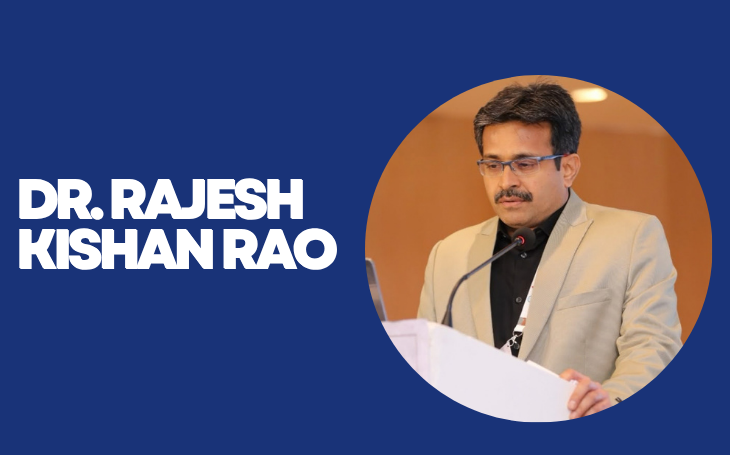
About Doctor: Dr. Rajesh Kishan Rao is a pioneering cardiothoracic surgeon who serves as a Professor and Unit Head of Cardiothoracic Surgery at the renowned Sri Jayadeva Institute of Cardiovascular Sciences and Research (SJICS&R) in Bengaluru. He completed his medical education with an MBBS from VIMS Bellary, followed by an MS in General Surgery from KMC Mangalore, and an MCh in Cardiothoracic Surgery.
With over 15 years of specialized experience and more than 3,000 total cardiac operations under his belt, he is celebrated as the pioneer of the Right Axillary Thoracotomy (MICS) technique in India. Through his self-developed "Traction Technique"—which allows complex keyhole heart surgeries to be performed using standard, budget-friendly surgical instruments—he has successfully completed over 700 minimally invasive procedures. Driven by a mission to serve underserved rural households, Dr. Rao has notably provided more than 95% of these high-end surgeries completely free of cost to below-poverty-line families.