
The Boat That Became a Hospital: How Floating Clinics Are Saving Lives on the Brahmaputra
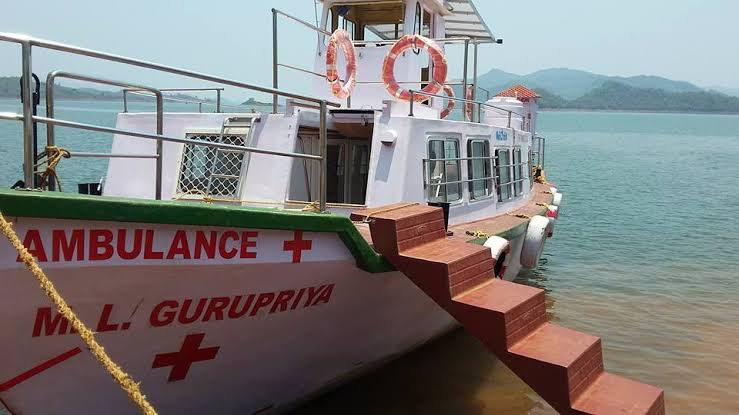
The Boat That Became a Hospital: How Floating Clinics Are Saving Lives on the Brahmaputra
Every year, when the Brahmaputra swells with the monsoon, it reminds Assam that rivers can be both a blessing and a barrier.
The river nourishes fertile land, sustains fisheries, and defines the culture of the state. But it also isolates hundreds of river islands—known locally as chars—where millions of people live with little or no access to healthcare.
For a pregnant woman in labour, reaching a hospital can mean crossing kilometres of turbulent water.
For a child with pneumonia, the nearest doctor may be several hours away.
For a snakebite victim, every passing minute can mean the difference between life and death.
For decades, this was accepted as the cost of living on the river.
Then one organisation asked a question that would transform healthcare delivery across Assam
If people cannot reach hospitals, why can't hospitals reach them?
That question gave birth to one of India's most remarkable public health innovations—a fleet of floating hospitals that now serve some of the country's most isolated communities.
Life Between Water and Sky
The Brahmaputra is unlike most rivers in the world.
Stretching more than 900 kilometres across Assam, it constantly changes course. Every flood season, villages disappear, new islands emerge, and old maps become useless.
Entire communities live on temporary sandbars.
Roads are rare.
Bridges are often non-existent.
Many villages can only be reached by boat.
Healthcare infrastructure struggles to keep pace with this constantly shifting geography.
Government health centres are usually located on the mainland.
Doctors are reluctant to work in inaccessible areas.
Emergency transport is almost impossible during floods.
As a result, something as routine as an antenatal check-up becomes a full-day journey.
Many families simply don't go.
The Vision
In the early 2000s, social entrepreneur Dr. Sanjoy Hazarika, founder of the Centre for North East Studies and Policy Research (C-NES), spent years travelling through Assam's river islands.
What he witnessed disturbed him.
Children suffering from preventable illnesses.
Women giving birth without trained medical assistance.
Vaccinations delayed because healthcare workers could not reach villages.
Communities surviving almost entirely outside the formal healthcare system.
The problem was not a lack of medical knowledge.
It was geography.
Rather than building dozens of expensive hospitals across constantly changing islands, Hazarika proposed something radical.
Bring the hospital onto the river.
Building a Hospital That Floats
The first boat clinic looked deceptively simple from the outside.
It resembled an ordinary river vessel.
Inside, however, it functioned as a primary healthcare centre.
Consultation rooms.
Vaccination storage.
Basic laboratory equipment.
Pharmacy supplies.
Maternal healthcare facilities.
Health education material.
Portable diagnostic equipment.
Medical officers, nurses, pharmacists, laboratory technicians and community health workers travelled together.
Each journey followed carefully planned routes covering multiple villages.
Instead of villagers travelling hours to seek care, healthcare arrived at their doorstep.
Winning Trust
Healthcare is built on trust.
When the first floating clinics arrived, many residents were cautious.
Some had never seen a doctor before.
Others depended entirely on traditional healers.
The medical teams understood that prescriptions alone would not solve the problem.
They listened.
They explained diseases in local languages.
They educated mothers about nutrition.
They discussed sanitation.
They encouraged institutional deliveries.
They vaccinated children.
They returned month after month.
Gradually, suspicion turned into familiarity.
Children began waiting excitedly for "the hospital boat."
For many villages, the boat's arrival became the most important day of the month.
Healthcare Beyond Medicine
The clinics quickly discovered that illness was only one part of the problem.
Pregnant women needed nutritional counselling.
Young mothers needed breastfeeding support.
Children needed immunisation.
Families needed clean drinking water education.
Teenagers required menstrual health awareness.
The floating clinics therefore evolved into comprehensive community health centres rather than travelling outpatient departments.
Each visit combined treatment with prevention.
The result was healthier communities rather than simply more consultations.
Saving Mothers
One of the programme's greatest achievements has been maternal and child healthcare.
Before boat clinics, many women completed entire pregnancies without meeting a trained healthcare professional.
Complications often went unnoticed until labour.
Today, expectant mothers receive
Regular antenatal examinations.
Blood pressure monitoring.
Anaemia screening.
Nutritional supplements.
Tetanus immunisation.
Birth preparedness counselling.
Referral services for high-risk pregnancies.
The impact extends beyond statistics.
It means fewer mothers dying during childbirth.
Fewer babies born without medical support.
More families beginning life together safely.
The Vaccination Challenge
Immunisation campaigns often fail in remote regions because healthcare workers simply cannot reach every child.
Boat clinics changed that equation.
Refrigerated vaccine carriers enabled medical teams to transport life-saving vaccines across long river journeys while maintaining the cold chain.
Children who previously missed routine immunisation schedules became part of national vaccination programmes.
Diseases that once spread easily through isolated communities became increasingly preventable.
Working With Nature
The Brahmaputra is unpredictable.
Floods change navigation routes overnight.
Sandbanks appear unexpectedly.
Dense fog reduces visibility.
Strong currents make docking difficult.
Medical teams sometimes travel for hours through severe weather simply to reach one village.
During monsoon season, conditions become even more challenging.
Yet these are often the moments when communities need healthcare the most.
Rather than avoiding floods, the programme adapted to them.
Healthcare learned to float.
A Partnership That Worked
The success of Assam's boat clinics lies not only in innovation but in collaboration.
The initiative, led by C-NES in partnership with the National Health Mission, demonstrated that governments and civil society could work together effectively.
Government supplied medicines, vaccines and healthcare personnel.
C-NES managed logistics, boats, operations and community engagement.
The result was a sustainable model rather than a short-lived pilot project.
Numbers That Tell a Story
Over the years, the network expanded across multiple districts.
Today, the programme has
Reached hundreds of river islands.
Conducted millions of health consultations.
Vaccinated countless children.
Provided maternal healthcare to thousands of women.
Improved institutional delivery rates.
Expanded awareness about hygiene, nutrition and disease prevention.
Behind every statistic is a family that no longer sees the river as an obstacle to survival.
More Than a Boat
The floating clinics have become symbols of dignity.
For decades, residents of the chars felt forgotten.
Healthcare rarely came to them.
Government services often arrived late, if at all.
The boats sent a different message.
"You matter enough for us to come to you."
That message is as powerful as any medicine.
Lessons for the World
Climate change is expected to increase flooding, displacement and geographical isolation in many parts of the world.
Traditional healthcare infrastructure alone cannot solve these challenges.
Assam's floating clinics offer an important lesson.
Innovation does not always require expensive technology.
Sometimes it requires redesigning healthcare around the realities of people's lives.
The idea has attracted international attention because it demonstrates how medical systems can adapt to difficult environments rather than expecting communities to adapt to healthcare.
The River Continues to Flow
Every morning, long before most clinics open their doors, healthcare workers board boats carrying vaccines, medicines, diagnostic kits and hope.
The engine starts.
The Brahmaputra opens before them.
Hours later, children line the riverbank waving as the floating hospital approaches.
For many, this is not simply a boat.
It is their doctor.
Their pharmacy.
Their maternity clinic.
Their vaccination centre.
Their health system.
In an era obsessed with billion-dollar hospitals and cutting-edge medical technology, one of India's most inspiring healthcare innovations continues to drift quietly across the waters of Assam.
Not because it is the most sophisticated.
But because it goes where healthcare is needed most.
Sometimes, the shortest distance between a doctor and a patient is not a road.
It is a river.