
Professor (Dr.) Jagat Rakesh Kanwar: Advancing Cancer Nanomedicine Through Science, Innovation, and Global Collaboration
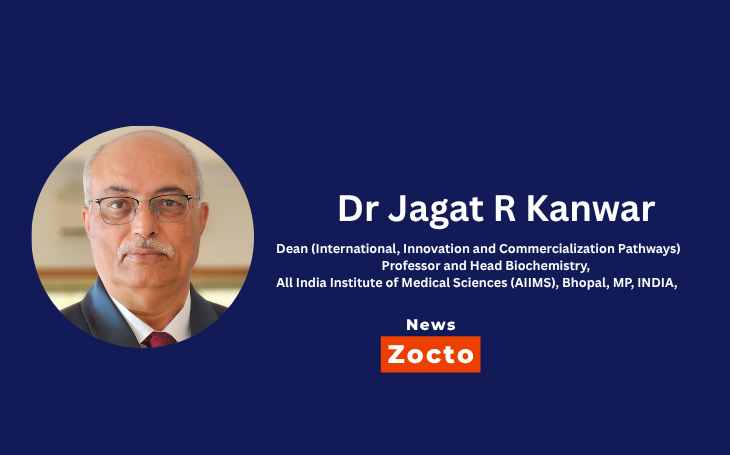
Dr. Jagat R. Kanwar stands among the most influential biomedical scientists shaping the future of cancer research, translational nanomedicine, precision healthcare, precisional nanotheranostics for cancers, neurodegenerative and inflammatory disease. With over three decades of international academic and translational research experience across India, Australia, and New Zealand and global collaborations over 20 countries, he represents a rare blend of scientist, innovator, mentor, and science leader along with institution-builder.
Currently, Dr. Kanwar serves as Dean (International, Innovation & Commercialization Pathways), Professor & Head of the Department of Biochemistry, and Head of the Clinical Biochemistry Laboratory at the All India Institute of Medical Sciences (AIIMS), Bhopal—a premier autonomous medical institution established by the Government of India under the Pradhan Mantri Swasthya Suraksha Yojana (PMSSY). Since joining AIIMS Bilaspur in 2020 and later moved to AIIMS Bhopal in 2021, he has led a department of more than 65 staff members, overseen a high-throughput clinical laboratory performing 10,000+ patient tests per month across 120 parameters, and guided academic and research programs spanning MBBS, MD, DM, MSc (Medical Biochemistry), Nursing, Allied Health Courses, Medical Laboratory Technician, and PhD training.
Ranked among the Top 2% of the world’s most highly cited scientists by Stanford University (since 2017) across Oncology, Nanoscience, and Clinical Chemistry, Dr. Kanwar’s work bridges laboratory discovery, clinical relevance, and real-world healthcare impact.
A Pioneer in Nanomedicine and Gene Therapy Dr. Kanwar is internationally recognized for his early and seminal contributions to cancer nanomedicine, particularly in liposome-based non-viral gene delivery systems. At a time when nanomedicine was still in its infancy, his work demonstrated the feasibility, safety, and immunological compatibility of nanocarriers for targeted gene therapy—establishing principles that continue to guide modern cancer therapeutics.His pioneering studies targeting hypoxia-inducible factor-1α (HIF-1α), survivin, immunoliposomes, miRNA (disease regulation), biosensors and lactoferrin, key drivers of tumor aggressiveness and therapy resistance, validated these molecules as both therapeutic targets and prognostic biomarkers. By integrating gene silencing with immune activation, his research demonstrated durable tumor regression and long-term immune memory—concepts that now underpin contemporary immuno-nanotherapy strategies. Professor Jagat R. Kanwar’s research centers on discovering and engineering key molecular targets involved in cancer, inflammation, neurodegeneration, and precision nanomedicine. His work spans microRNAs, aptamers, LNA‑modified constructs, and targeted nanocarriers, forming the backbone of his therapeutic and diagnostic innovations.
Collectively, this body of work laid foundational scientific and translational groundwork that influenced the design logic behind clinically approved liposomal and nanocarrier-based cancer therapies used globally today. Translating Innovation from Bench to Bedside A defining hallmark of Dr. Kanwar’s career is his unwavering commitment to translational science—ensuring discoveries do not stall at publication but progress toward patient impact. His research leadership spans the development of:- Polymeric, ceramic, and hybrid nanocarriers for oral and systemic drug delivery
- The microRNAs (miRNAs) based technologies in Disease Regulation
- Investigates how specific miRNAs regulate cancer progression, chronic inflammation, and immune responses
- Focuses on using miRNA modulation as a therapeutic strategy
- Aptamers and Chimeric Aptamer–siRNA Constructs
- Designs aptamers that selectively bind disease specific biomarkers.
- Develops LNA modified chimeric aptamer–siRNA conjugates for targeted gene silencing in cancer cells.
- These constructs improve stability, specificity, and intracellular delivery.
- Immunoliposomes and Nanocarriers
- Develops nanomedicine platforms such as:
- Immunoliposomes
- Targeted nanoparticles
- Organ on chip compatible delivery systems
- These carriers deliver drugs, siRNA, or aptamer constructs directly to diseased tissues.
- Molecular Signaling Pathways in Cancer & Inflammation
- Studies fundamental signaling mechanisms driving:
- Tumor growth
- Metastasis
- Chronic inflammatory diseases
- Uses this knowledge to design molecule based therapeutic strategies.
- Biosensing & Precision Diagnostics
- Works on aptamer-based biosensors and advanced bioanalysis tools.
- Applies these to cancer detection, infectious diseases, and COVID 19 diagnostics.
- Lactoferrin-based nanocarriers capable of crossing complex biological barriers, including the blood–brain barrier
- Nano-nutraceutical platforms designed to improve bioavailability, safety, and patient compliance
- Multifunctional nanotheranostic systems combining therapy, imaging, and immune modulation
- Microfluidic and IoT-enabled point-of-care diagnostic devices, including patented biosensors and arterial blood gas (ABG) analyzers
Notably, his work has resulted in 18 patents/PCTs, with licensed to biotech companies in Australia, New Zealand and the UK. One anti-vascular agent developed under his leadership (DMXAA) is now listed in the Sigma-Aldrich catalogue, underscoring tangible clinical and commercial impact. More recently, his team was granted three Indian patents for a microfluidic ABG device (ABG devices, or Blood Gas Analyzers, are essential tools used in biochemistry tests to assess a patient's respiratory and metabolic status), engineered for rapid, infrastructure-independent diagnostics and System and Method for Point-of-Care Diagnosis and Monitoring of Uric Acid Levels (patent 202321073582) and A Point-of-Care and IoT-Enabled MoS2-Based Sensor for Uric Acid Detection in Human Serum, this developed portable UA electrochemical sensor will have a broad range of applications in the areas of healthcare diagnostics and biotechnological applications.
What distinguishes Dr. Kanwar’s translational approach is his ability to align scientific rigor with regulatory compliance, scalability, cost-effectiveness, and patient-centric design—ensuring innovation remains ethical, reproducible, and accessible. Ethical Leadership in Cancer Nanomedicine In a field where innovation directly intersects with patient vulnerability, ethical responsibility is central to Dr. Kanwar’s research philosophy. From early-stage design through translational pipelines, his work integrates biosafety assessments, biocompatibility testing, toxicity profiling, immune response evaluation, and biodegradability analysis. He ensures strict adherence to GLP and GMP standards, engages actively with institutional ethics committees, and aligns translational research with ICMR, CDSCO, and international regulatory frameworks. Informed consent, data integrity, and conflict-of-interest transparency remain non-negotiable principles across all collaborations. Importantly, Dr. Kanwar views ethics not as a regulatory hurdle, but as a core scientific value—one that also encompasses patient data privacy, equitable access, and inclusivity, especially when designing diagnostics and devices for low-resource settings. Leadership at AIIMS Bhopal: Building a National Innovation Ecosystem As Dean (International, Innovation & Commercialization Pathways), Dr. Kanwar has been instrumental in positioning AIIMS Bhopal as a growing hub for interdisciplinary biomedical innovation. He has spearheaded:- Strategic collaborations with IITs, IISc, CSIR laboratories, and global universities
- Cross-disciplinary programs in translational nanomedicine, biomedical engineering, and regenerative science
- Public–private partnerships aligned with national priorities such as Make in India, Affordable Cancer Care, and One Health
- Institutional frameworks integrating research, commercialization, and regulatory science
Mentorship is a cornerstone of Dr. Kanwar’s legacy. He has supervised 50+ PhD scholars, multiple MD, DM and MSc trainees, and over a dozen postdoctoral fellows, many of whom now hold leadership positions in premier institutions worldwide.
His mentoring philosophy emphasizes not only scientific excellence, but also regulatory awareness, ethical accountability, and translational thinking. Through global collaborations spanning Australia, New Zealand, China, Indonesia, Taiwan, Malaysia, the United States, the UK, Europe, and the Asia-Pacific region, he has fostered an ecosystem where engineers, clinicians, chemists, data scientists, and policymakers co-create impactful solutions.
Vision for the Future of Cancer Care Dr. Kanwar envisions a future where cancer becomes a precisely manageable disease, supported by:- Bio-responsive and immune-targeted nanocarriers
- Integrated, real-time diagnostics at the point of care
- AI-assisted and data-driven personalization
- Equitable access to advanced cancer technologies
To sum up the accomplishments of Professor Jagat Rakesh Kanwar:
Professor Jagat Rakesh Kanwar, PhD (Gastroenterology, Molecular Immunology, PGIMER Chandigarh), is a globally recognized biomedical scientist, innovator, and academic leader with a career spanning over three decades across India, New Zealand, and Australia. He currently serves as Head of Biochemistry, Clinical Biochemistry Laboratory, and Dean (International, Innovation & Commercialization Pathways) and Chairperson of the MoU Committee, at AIIMS Bhopal, integrating nanomedicine, molecular medicine, and translational research with tangible healthcare impact. Professor Kanwar’s leading transformative contributions to initiatives such as LactoPharma, BioDeakin, the Deakin India Research Initiative (DIRI), Nanomedicine-Laboratory of Immunology Molecular Biomedical Research, the Molecular & Medical Research Strategic Research Centre, and the TERI–Deakin Nanobiotechnology Centre, have established enduring institutional legacies across New Zealand, Australia, and India. His prolific portfolio includes 300+ high impact publications, 13,450+ citations, 18 patents, and recognition in Stanford’s Top 2% Scientists. A passionate mentor, he has trained over 50 PhD, 6 MD, 2DM, 5 MSc, 15 Honours students, 12 international postdocs, and 7 clinician–scientists. Honored with awards such as the Dr. Keshav Baliram Hedgewar Aarogya Bhushan, Forttuna Global100 and Gust of honour 2025 in Cancer nanomedicine (Dubai), Vice Chancellor’s Award for Excellence in HDR Supervision (Deakin University), Professor Kanwar’s legacy lies in advancing science across borders to deliver life-changing healthcare worldwide.