
Dr Rajesh K Rao: When the Heart Heals Without a Scar: Father of Right Axillary Thoracotomy(MICS) in India
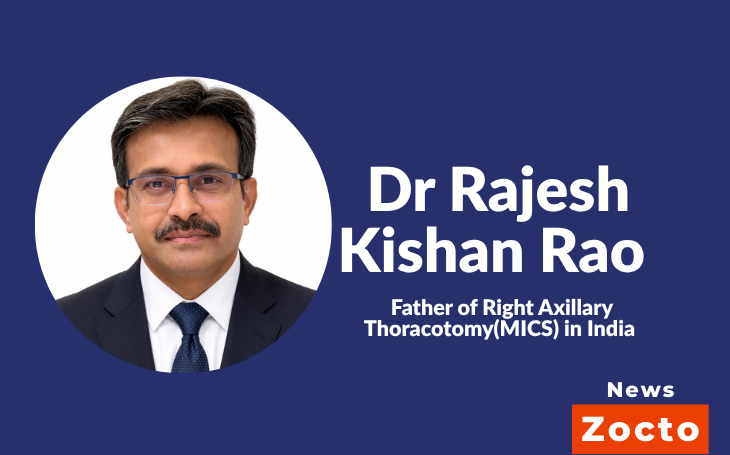
THE BENGALURU SURGEON QUIETLY REWRITING CARDIAC HISTORY
From a Small-Town Dream to a Global First: How a Government Hospital Doctor Is Changing the Way India Operates on the Heart
Less pain, hidden scars, zero compromise—inside the journey of Dr Rajesh Kishan Rao and the silent revolution of keyhole heart surgery at Jayadeva.
On a typical weekday morning at Sri Jayadeva Institute of Cardiovascular Sciences and Research, the corridors are already full before the sun has properly risen over Bengaluru. Families clutch files and prayer beads in equal measure, children doze on their mothers’ shoulders, and anxious relatives stand in quiet clusters outside the operating theatres. In one of those theatres, through an incision barely longer than a house key, a surgeon from a small town in Karnataka is changing everything that India has long taken for granted about open-heart surgery. That surgeon is Dr Rajesh Kishan Rao, Professor and unit head of cardiothoracic surgery at Jayadeva. For most of his patients, he is simply “doctor saar”. For a growing circle of surgeons in India and abroad, he is the man who has taken a once‐niche technique—the Right Vertical Infra‐Axillary Thoracotomy, or RVIAT—and turned it into a workhorse of modern cardiac care, especially for the poor. Instead of cutting through the breastbone, he reaches the heart through a discreet incision under the right arm, between the ribs, sparing the sternum and leaving the front of the chest untouched. For a layperson, that might sound like a small adjustment in route. For the patient on the table, it is the difference between waking up with a long, angry scar down the centre of the chest and waking up to find the wound hidden in the natural crease of the underarm. It is the difference between weeks of guarded movement and a much faster return to school, farm, or factory. It is the difference, especially for young girls and women, between a lifetime of self‐consciousness and the freedom to live without explaining a scar every time they wear a sari or a salwar with a low neckline.
RVIAT was not born in Bengaluru. Surgeons in Switzerland and China first pushed the boundaries of right axillary and infra‐axillary approaches, publishing landmark data that showed these “hidden scar” incisions could be safe and effective for a range of simple and moderately complex congenital heart defects. But the technique had its own stubborn limitation: the heart lay deep and far from the small incision, and reaching the aorta for cannulation—where the tubes of the heart‐lung machine are connected—could be difficult, especially in heavier adults. This is where Dr Rao’s own innovation enters the story. Standing over countless patients in the Jayadeva operating theatres, he kept asking a simple question: how could he bring the heart closer to his hands without resorting to expensive, long‐shafted instruments that only the richest hospitals could afford? The answer emerged as a deceptively simple manoeuvre—what he would eventually publish as the “Traction Technique” for Aortic Cannulation in RVIAT.Instead of accepting the depth of the field as a limitation, he placed specially positioned sutures on the covering of the aorta and snared them with tourniquets. When his assistant applied upward and outward traction, the heart and great vessels seemed to rise towards the incision, shrinking the distance by several precious centimetres. Suddenly, cannulation through that tiny window became as straightforward as it is in a full sternotomy. There was no need for robotic arms or custom tools; standard instruments worked just fine. For a government hospital serving thousands of poor patients, this was not just a clever trick—it was the key that made high‐end minimally invasive surgery feasible at scale.
The impact of this innovation has gone far beyond a few technically satisfying operations. Over the years, Dr Rao has performed 700 minimally invasive keyhole surgeries using RVIAT and related transaxillary approaches, out of over 3,000 cardiac surgeries in total.
What makes this number remarkable is not only its size but its context: more than 95% of these keyhole operations have been done free of cost for patients with Below Poverty Line cards, in a system where similar procedures can easily cost several lakhs in the private sector.
For families arriving from Koppal, Raichur or Ballari with barely enough money for bus fare and food, the idea of a Rs 5–7 lakh operation is not just frightening—it is impossible. At Jayadeva, thanks to state funding and national insurance schemes, they are told something that still feels unreal to many: “The surgery will be done. Don’t worry about the money now.” In that moment, the technical genius of a hidden incision and a tailor‐made traction method dissolve into something far more fundamental— relief, gratitude, the sense that the health system has not completely forgotten them.
Recognitions have followed, though often later and more quietly than one might expect. Zocto News recently honoured Dr Rao with a Certificate of Excellence, naming him the top minimally invasive cardiac surgeon for performing more than 600 RVIAT‐based operations, the highest number of such procedures in a government hospital in India. The framed certificate, with its gold seal and crisp text, hangs on a wall that also carries old case files and handwritten notes from grateful families. It is less a personal trophy than a reminder that complex, world‐class procedures can indeed be offered in public hospitals when someone refuses to accept the usual limits.
Mainstream media, too, has started catching up with the story behind the statistics calling him an “unsung hero”, tracing his journey from a government school in Koppal district to the helm of a high‐volume cardiothoracic unit in Bengaluru.
The piece spoke of how he once watched a villager wait 12 hours for treatment after a simple fracture, a memory that lodged so deeply that it shaped his resolve to become a doctor for those who cannot pay their way to the front of the queue.
Another widely shared digital article summed him up more bluntly: “Bengaluru doctor provides free healthcare for underprivileged people,” highlighting that most of his minimally invasive surgeries are either free or heavily subsidised for the poor.
Beyond the pages of newspapers, the recognition has also come from the political and civic space.
As part of the “Change Makers of Bengaluru” initiative, Bengaluru South MP Tejasvi Surya invited Dr Rao to an interaction at a neighbourhood café alongside activists, NGO workers, athletes and artists working quietly across the city. In a room full of people fighting for cleaner lakes, better dialysis support, animal welfare, menstrual health and palliative care, the cardiothoracic surgeon from Jayadeva was just one more changemaker—but also a symbol of what it looks like when high‐end medicine refuses to detach itself from the everyday struggles of ordinary citizens.
To understand how far this journey has travelled, one has to step into the ballroom of a Bengaluru hotel on a different morning—the first day of TRANS AX SUMMIT 2025. The screens glow with live surgical feeds, the registration desk hums with badges being printed, and more than 350 surgeons, anaesthetists, perfusionists and nurses from India and abroad take their seats. Another hundred are logged in online. The banners carry a claim that would have sounded ambitious a few years ago: the world’s first dedicated summit on the transaxillary approach to cardiac surgery. The idea for such a meeting could easily have been owned by a large Western centre with abundant funding and industry backing. Instead, it is a government hospital in Bengaluru—Sri Jayadeva Institute—that has pulled it off. Over two days, the summit showcases not just technology and data, but a philosophy: that reaching the heart without breaking the sternum is not a boutique option but the future of many cardiac procedures. The sessions range from basic principles of patient selection to intricate discussions on how to adapt the technique for different body types and disease patterns. A defining moment arrives when Dr Rajesh Kishan Rao takes the podium to share his experience with more than 500 successful transaxillary surgeries performed at Jayadeva—a series few centres in the world can match. The numbers matter, of course: such a large cohort helps answer questions about safety, reproducibility and long‐term outcomes. But it is the setting that gives the presentation its special charge. Here is a surgeon from a state‐run Indian hospital, presenting a massive, largely pro‐poor experience to an audience that includes international faculty from Italy, Spain and other European centres. For once, the traffic of innovation does not feel one‐way. In the discussion that follows, the questions from foreign experts are as much about logistics and policy as about sutures and cannulas. How does a public hospital maintain such volumes? How are costs contained? How is training structured? And every time Dr Rao points back, directly or indirectly, to the same triad—state support, institutional vision, and the conviction that the poorest patient deserves the best available technique, not the most basic one that the budget will allow.
Outside the conference halls and newspaper pages, the impact of this work is best understood in quieter scenes. A teenage girl from a village in Ballari, who once stopped going to school because climbing stairs left her breathless, now races her younger brother to the bus stop after an RVIAT repair of a heart defect. A young mother whose heart valve was replaced through a keyhole incision stands in front of her mirror at home, searching in vain for the scar that would have bisected her chest; there is only a faint line hidden under her arm. A daily‐wage worker who would have been out of work for months after a conventional sternotomy returns to his job in a fraction of the time, his family spared the slide into debt. A young Indian lady from Canada who underwent the surgery and a year later was safely able to deliver her second baby.
The programme at Jayadeva has also begun to reshape the field itself. By proving that MICS can be delivered safely and cost‐effectively in a government setup, it challenges the notion that cutting‐edge heart surgery is the sole privilege of private hospitals. Shorter ICU stays, lower transfusion needs and fewer wound complications translate into direct savings for the health system, allowing more patients to be treated within
the same budget. Training modules and fellowships developed around the Jayadeva experience are seeding these techniques in other centres, creating a new generation of Indian surgeons comfortable operating through keyholes instead of long incisions.
Yet, for all the statistics and honours, Dr Rao’s story remains, at its core, disarmingly simple. This is the tale of a boy from Gangawathi who once watched his neighbours wait too long for basic care and vowed, perhaps a little stubbornly, that he would one day become a heart surgeon who would not turn the poor away. It is the story of how that vow survived failed entrance exams, long hostel nights, and thousands of hours spent bent over operating tables. And it is the story of how, in a crowded government hospital in Bengaluru, that promise has taken the shape of a tiny incision under the arm, a few carefully placed traction sutures, and hundreds of hearts beating more freely today.
In an era when medicine is often spoken of in terms of market share and margins, the quiet revolution at Jayadeva offers a different headline: that world‐class innovation can grow out of public wards, that the best technology can be reserved for the poorest patients, and that sometimes, the most radical thing a surgeon can do is make sure his finest work leaves almost no scar at all.