
Beyond the ICU: Lessons in Resilience From Critical Care to Everyday Life
Beyond the ICU: Lessons in Resilience From Critical Care to Everyday Life
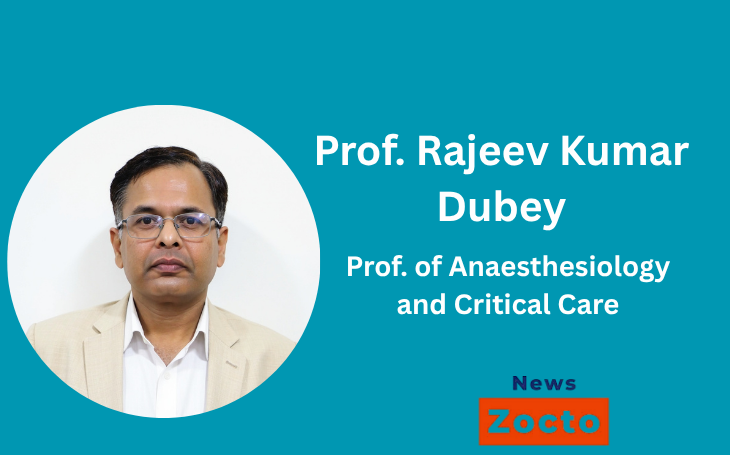
By Prof. Rajeev Kumar Dubey
Professor of Anaesthesiology and Critical Care Medicine, Banaras Hindu University; Poet and Author
In the intensive care, we witness how fragile life can be, but also how strong people can be in tough times. The lessons learned here are useful not just in the hospital, but in everyday life as well.
Over the years at the Institute of Medical Sciences, Banaras Hindu University, I have done research and gathered experiences that I have share as a poetic expression in works like Urvi and Masks and Measures. Being both a doctor and a poet has shown me that resilience is more than just being medically stable. It means living with uncertainty, hope, and compassion.
1. Mastering the Art of Acceptance and Action
In the ICU, doctors and nurses realize that no matter how much they prepare, some things are out of their control. We focus on what we can do, like giving immediate care and working together, and accept what we cannot change.
This lesson is true in daily life too. We often feel anxious when we try to control things we can't predict. Resilience is about handling what we can, and calmly accepting the rest, a lesson found in both spiritual teachings and critical care.
2. The Power of Small Adjustments
In critical care, recovery happens in small steps, like better oxygen levels, steady blood pressure, or even a patient’s smile.
The same goes for life. Big changes come from steady, small actions. We build resilience by staying committed over time, not by making big promises.
3. Composure Amidst Crisis
The ICU staff have to stay calm even when alarms go off and things get worse. Panicking doesn't help; what matters is thinking clearly and acting quickly. In life, too, we need a calm mind to face challenges. We become more resilient by responding with thought instead of reacting without thinking.
4. Communication: The Lifeline of Healing
Critical care relies on clear communication between healthcare teams and with patients’ families, especially during tough or hopeful times.
In everyday life, conflicts often come from misunderstandings or things left unsaid. To build resilience, we need to communicate clearly and thoughtfully.
5. Embracing Vulnerability as Strength
The ICU shows us vulnerability: families at bedsides, patients in fragile moments, and healthcare workers carrying responsibility. This vulnerability also shows courage—the courage to hope, help, and care. True strength comes from facing and accepting our vulnerability, not avoiding it.
6. Collective Purpose Over Individual Heroism
No doctor or nurse saves a life by themselves. Critical care is a team effort, with nurses, therapists, technicians, support staff, and families all playing important roles. Life also thrives when we work together, share goals, and support each other, instead of trying to do everything alone.
7. Hope as a Practical Force
Hope in the ICU is more than just wishing for the best. It is a steady force, based on both realism and optimism. It helps people keep going, endure, and believe.
In life, hope is not naive. It is a practical force that helps us stay resilient during uncertain times and find meaning. Hope is what keeps us moving forward.
8. The Present Moment is Our True Continuum
We live in the present, and our resilience comes from focusing on this moment. Critical care demonstrates that healing begins in the present moment, through each breath, decision, and act of kindness. We cannot change the past, and the future remains uncertain. Life’s true living happens in the now, and resilience anchors itself in this sacred present.
9. Healing is Non-linear
Healing is not a straight line. Whether we are recovering from illness or personal setbacks, progress is often slow and setbacks are normal. We build resilience by accepting that progress is uneven and by not losing hope when things get tough.
10. Purpose transforms the Struggle into a Meaning
Doctors, caregivers, and others look for a purpose during hard times. A purpose turns suffering into a meaning, linking pain with growth, loss with learning, and challenges with compassion. Resilience is not just about getting through hardship; it is also about finding purpose in it. This is what true resilience is all about.
The ICU is a place where science and compassion come together, where urgent moments make us reflect, and where we find meaning as we face mortality. Here, we learn that resilience is not something fixed, but is shaped by acceptance, action, hope, and connection. My experiences in medicine and literature confirm this. The lessons from critical care apply to every part of life where people face challenges, changes, and choices.
We carry these lessons beyond the ICU, using them to become more resilient, empathetic, and purposeful.
(Dr. Dubey is a respected physician, educator, and poet whose work connects clinical expertise with spiritual reflection. He has been recognized for his contributions to literature and medicine and continues to inspire through his writing and service.)